
About the course
As veterinary professionals we are constantly utilizing different regiments of pain medications on our patients, but do you know how they work or what you could be doing better? This course will cover common medications used in small animal practice, while touching on new pain alleviating medications coming down the line and utilizing some classics in a new way. Participants will leave knowing the basics and some helpful tricks when using multimodal approaches to pain medication selection.

Stephen Niño Cital
Stephen Niño Cital holds a Masters in veterinary anesthesiology and is a veterinary technician specialist (VTS) in research anesthesia among other credentials. He has a passion for anesthesia, pain management, and integrative medicine. Stephen has authored numerous peer reviewed articles and contributed to several textbooks- including acting as the lead editor for the first veterinary cannabinoid medicine textbook and more recently a second edition of a pain management textbook. He has many exciting professional highlights but some of his favorites include being part the scientific team that discovered acidic cannabinoid forms are absorbed more efficiently than decarboxylated forms, discovered a common drug used in anesthesia causes a serious complication known as methemoglobinemia in monkeys, invented a smaller and more practical blood filter for animals during blood transfusions, and helped gain title protection for veterinary technician specialists. Stephen is a lab manager for HHMI at Stanford University in the department of neurobiology, and the Chief Veterinary Nursing Officer and director of the pain and cannabinoid medicine services at Remedy Veterinary Specialists. Additionally, he is the COO of the Veterinary Anesthesia Nerds, LLC., and Executive Director of the Academy of Laboratory Animal Veterinary Technicians and Nurses. His professional goal with CaRVTA is to elevate how RVTs are used in practice and strengthen the profession via legislation and regulation. His current pursuits include completing another acupuncture certification and a VTS in neurology.
Curriculum
-
1
Introduction and Overview
-
(Included in full purchase)
Course Description & Learning Objectives
-
(Included in full purchase)
Course Materials
-
(Included in full purchase)
Accessing Research Articles
-
(Included in full purchase)
-
2
Pain Medications and How They Work: Part 1
-
(Included in full purchase)
Pain Medications: Part 1
-
(Included in full purchase)
Additional Resources & References
-
(Included in full purchase)
-
3
Pain Medications and How They Work: Part 2
-
(Included in full purchase)
Pain Medications: Part 2
-
(Included in full purchase)
Additional Resources & References
-
(Included in full purchase)
-
4
Pain Medications and How They Work: Part 3
-
(Included in full purchase)
Pain Medications: Part 3
-
(Included in full purchase)
Additional Resoures & References
-
(Included in full purchase)
-
5
Resources & Wrap-Up
-
(Included in full purchase)
Putting it into Practice
-
(Included in full purchase)
Team Activity: Case Review & Discussion
-
(Included in full purchase)
Pain Management Plan
-
(Included in full purchase)
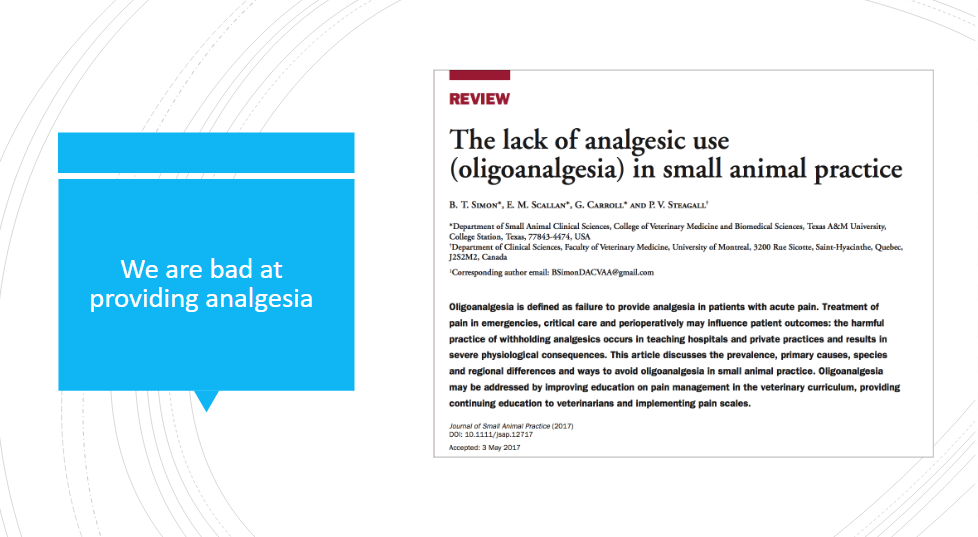
Closing the Gap in Pain Management
Analgesia remains inconsistent across cases and settings. Learn how to make more informed decisions and build layered pain management plans that better support your patients.
A Clear Structured Approach to Analgesia
Explore key analgesic classes including opioids, NSAIDs, adjunct therapies, and local/regional techniques, in focused, easy-to-follow sections.
.png)
From Learning to Practice
Includes practical tools, team-based case review activities, and curated references to support real-world application and improve communication across your care team.
From the Small-Paws Community
Insights from across the Small-Paws community, from veterinary professionals and trainers to animal care staff, volunteers, and caregivers, all bringing this learning into everyday practice.
Stephen was the most intriguing speaker of the conference. I found myself wanted to go to his lectures simply because it was him presenting, even if the subject matter wasn't my number one choice. And I enjoyed his music selections prior to his presentations.
2018
Great speaker, very engaging, very knowledgeable in the subject. Would love to attend another lecture from this speaker.
2017
Thoughtful, evidence-informed learning for people who care for animals
On-demand and self-paced, so you can revisit key concepts whenever you need.
$35.00